
Pursue Your Purpose
Earn your M.S. in Human Development and Family Studies to advance your understanding, skills and career. Through exploring key factors that are foundational to successful interpersonal relationships and positive development throughout all stages of life, you’ll gain the tools to foster well-being in a variety of settings. Many students continue their education into a doctoral program, while others pursue careers in postsecondary education, public policy, and other organizations providing services to children and families.The program offers a thesis and non-thesis track.
Plan A: Research Track = 30 credits
Plan B: Professional Track = 30 credits
Master’s Degree in HDFS with a Diversity, Youth, and Family Development (DYAD) Focus, Plan A, Thesis
- Students complete a 30-credit Master’s degree in preparation for continued study in a doctoral program. Plan A is a research emphasis program that includes the completion of a thesis.
Master’s Degree in HDFS with a Diversity, Youth, and Family Development (DYAD) Focus, Plan B-Professional, Non-Thesis
- Students complete a 30-credit Master’s degree with a focus on applied practice or policy development, including work in government, business or foundations.
Note: DYAD was formerly known as Lifespan Human Development and Family Studies (LHDFD); if you are applying for graduate study with the DYAD concentration, select the LHDFD concentration in the application system.
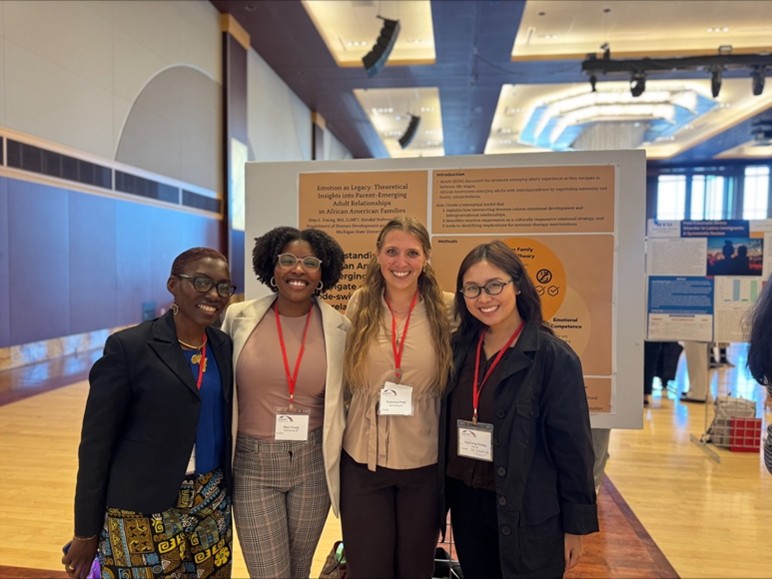
Requirements for the Master of Science Degree in Human Development and Family Studies
The Master of Science Degree in Human Development and Family Studies is available under Plan A (with thesis) or Plan B (without thesis). A total of 30 credits is required for both Plan A and Plan B.
Requirements for Both Plan A and Plan B
- All of the following courses (12 credits):
HDFS 810 Theories of Human Development 3
HDFS 847 Theories of the Family 3
HDFS 880 Research Design and Measurement 3
HDFS 892 Seminar in Human Development and Family Studies 3
Additional courses may be substituted for HDFS 892 with advisor approval.
Additional Requirements for Plan A
- The following course (3 credits):
HDFS 881 Quantitative Methods in Human Development 3
2. Complete 9 credits chosen in consultation with the student’s adviser.
3. Complete 6 credits of HDFS 899 Master’s Thesis Research.
Additional Requirements for Plan B
- Both of the following courses (6 credits):
HDFS 481 Research and Quantitative Methods in Human Development and Family Studies 3
HDFS 845 Foundations of Family Study 3
2. Complete 12 credits chosen in consultation with the student’s adviser.
For the most up-to-date information, visit the registrar's website.
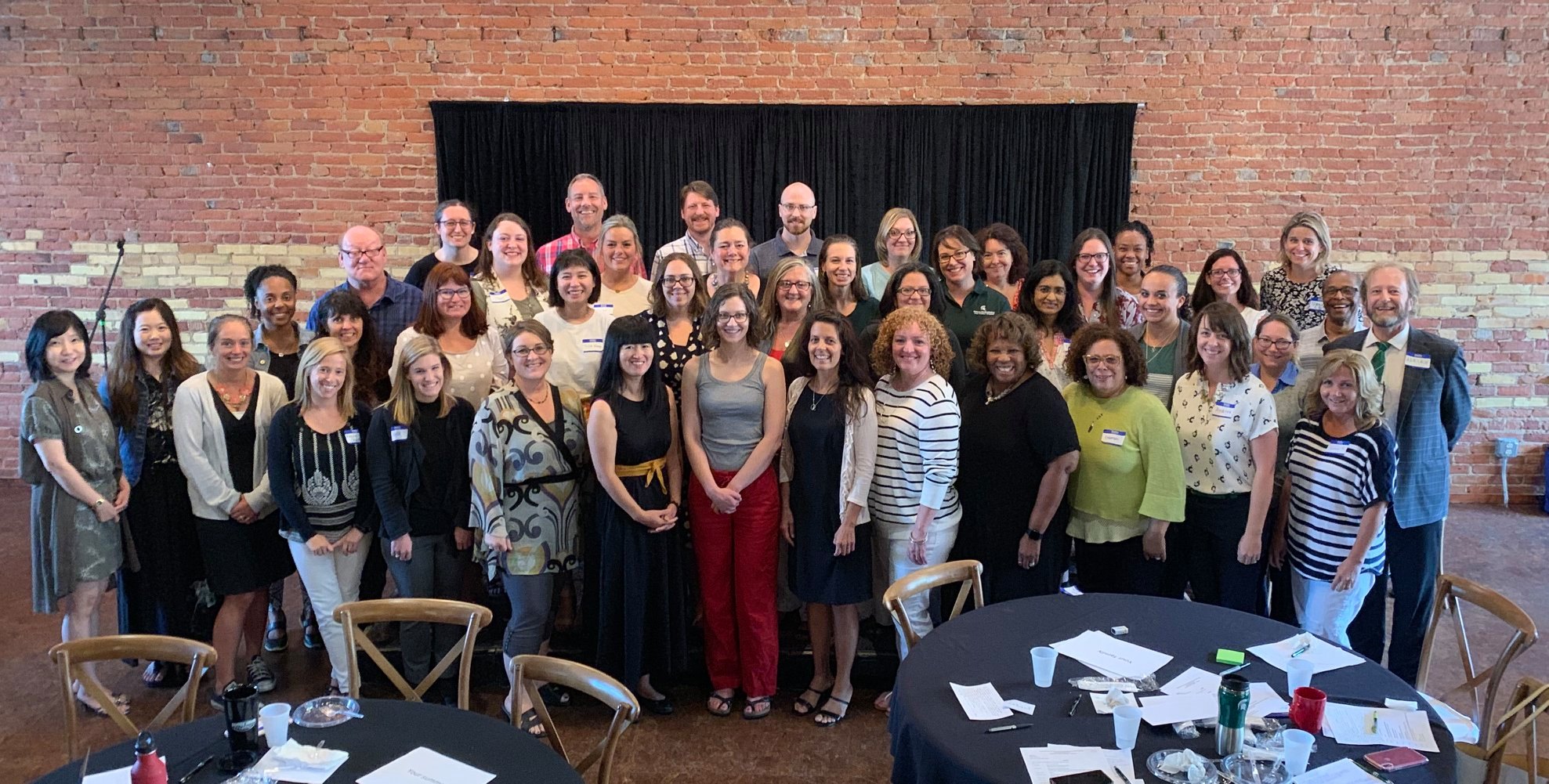
Join a nationally known, diverse community of scholars exploring child/adolescent development, culture, gender, sexuality and families. Students in our masters program are immersed in a highly diverse, dynamic and influential intellectual community around research that has important practical implications. Our faculty has expertise in areas such as immigrant families and communities, culture, racial/ethnic socialization, child/adolescent and lifespan development, sexuality and gender-based violence. Our MS program leverages the extraordinary interdisciplinary strengths of our department and prepare students for both cutting-edge research and academic careers as well as careers in government and social policy.
Faculty
Dr. Linda Halgunseth is an associate professor whose research focuses on parenting and children’s health and well-being in African, European, and Latin American families.
Dr. Megan Maas is an assistant professor in Human Development & Family Studies. Her work sits at the intersection of sexual violence prevention and sexual health promotion.
Dr, Desiree Qin is a professor whose research focuses on highlighting nuanced, complex family processes that have been overlooked in quantitative work on Asian immigrant families, especially struggle in parent-child relations, e.g., emotional alienation, parent-child conflicts, communication challenges and negative impact of tiger parenting.
Dr. Francisco Villarruel is a professor whose research seeks to contribute to a fair and equal justice program for youth. He has also been involved in research that focuses on youth development and what communities can do to foster the development transitions of youth to adulthood.
Dr. Yijie Wang is an associate professor whose research interests center on the development of adolescents, particularly those from racial and ethnic minority families. Her work investigates how socio-cultural processes (e.g., ethnic/racial socialization, discrimination) in multiple developmental settings (e.g., family, peer, school, neighborhood) influence youth’s psychosocial and psychobiological adjustment.
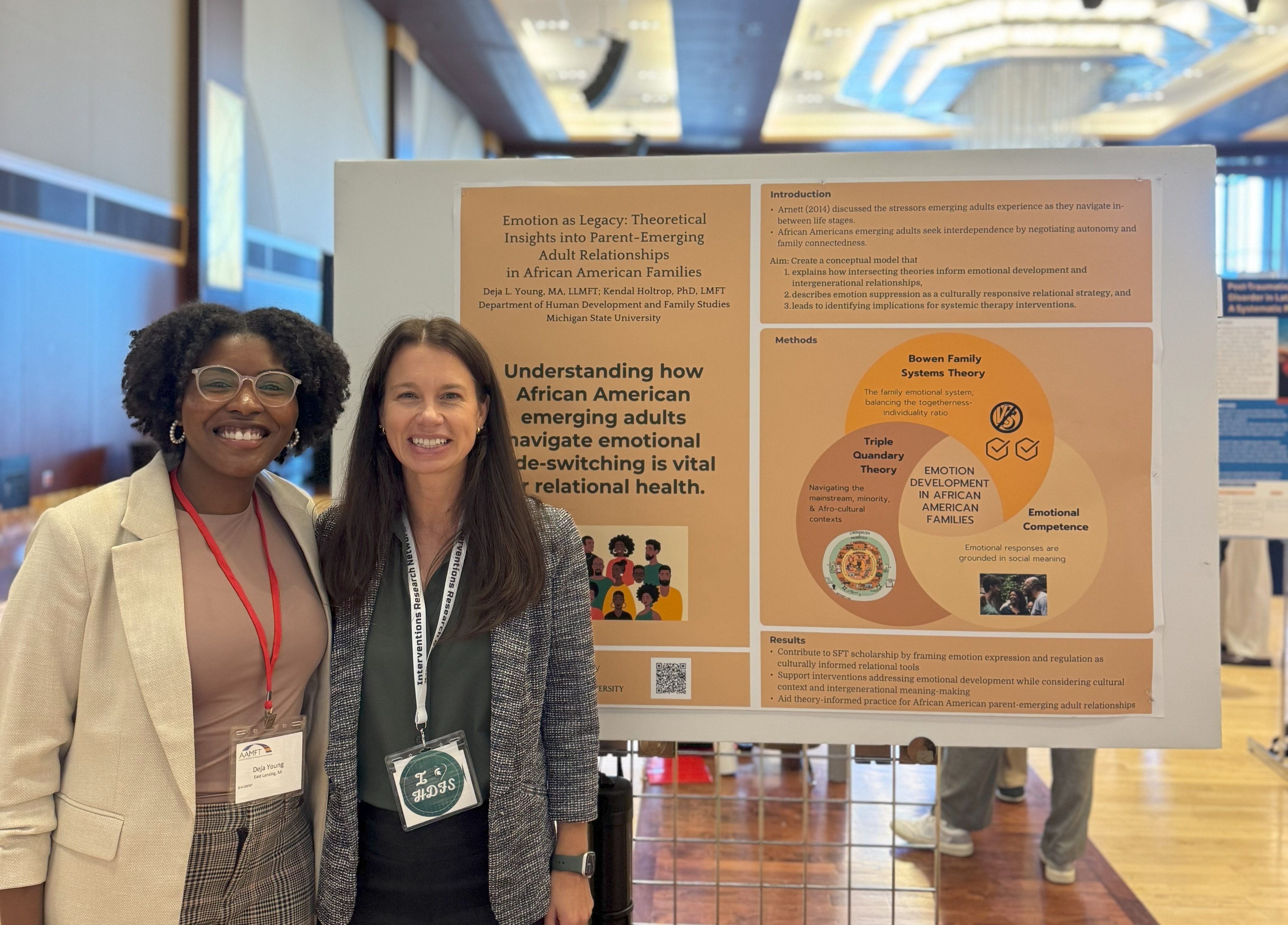
Faculty in HDFS are national leaders in applied prevention and intervention research to improve the lives of children, adolescents, families and marginalized communities. Our faculty are funded by national funding agencies, including the Administration for Children and Families, National Institutes of Health, U.S. Department of Defense, U.S. Centers for Disease Control and Prevention, U.S. Department of Agriculture, National Science Foundation, and the Institute of Education Sciences.
Select cutting-edge funded research in the department includes:
- Infant and child emotional development
- Mindfulness practices to reduce teachers’ stress in early childhood settings
- Sensor technology to understand how children with autism communicate
- Stress and resiliency intervention in military families
- Depression risk and intervention in adults
- Campus sexual assault
We invite you to visit some of our faculty laboratory websites here:
- Early Language and Literacy Investigations (ELLI) Lab
- Diversity in Adolescence Lab
- Research in Autism and Developmental Disabilities