Pursue Your Purpose
Earn your M.S. in Child Development and elevate your ability to serve the needs of children and their families. Knowledge of child and adolescent development can be applied across a range of practice settings and disciplines including child psychology, early childhood education, policy and advocacy, social work, and more. The program offers a thesis and non-thesis track.
Plan A: Research Track = 30 credits
Plan B: Professional Track = 32
Master’s Degree in Child Development, Plan A Research/Thesis
Students complete a 30-credit master’s in child development with an emphasis on continued study in the doctoral program. Preparation focuses on the deepening of content knowledge, developing methodological and statistical skills, and building translational research skills in addition to gaining research experience with their faculty mentor(s).
Master’s Degree in Child Development, Plan B Professional/Non-Thesis
Professional Focus Students complete a 32 credit master’s in child development focusing on: 1.) evidence-based practice, including program evaluation, assessment of development and learning, and early childhood curriculum planning and implementation for infants, toddlers and preschoolers, and curricular adaptations to meet the needs of diverse children and families; 2.) the supervision and professional development of early childhood practitioners; and 3.) the role of family in early education and development.
M.S. in Child Development
Plan A: Research Track
- HDFS 810: Theories of Human Development
- HDFS 811: Child Development from Ecological Perspectives
- HDFS 821: Early Prevention and Intervention Birth to Five
- HDFS 892: Seminars in Diversity
- One course from departmental offerings on diverse families; diversity is defined broadly and could include diversity in race, culture, developmental abilities, SES, family processes.
- One course (3 credits) in research methodology
- One course (3 credits) in quantitative methods
- HDFS 827 - Language and Literacy Development from Infancy to Formal Schooling OR HDFS 826 Social-Emotional Development Birth to Five: Biology, Relationships, & Culture
- HDFS 899 - Thesis credits (6 credits)
- Choose 1 elective course
Total Credits = 30
Plan B: Professional Track
Child Development Content (6 credits)
- HDFS 811: Child Development from Ecological and Cultural Perspectives
- HDFS 825: Families and Children with Special Needs OR HDFS 449 Children with Special Needs and Their Families
Family Processes (6 credits)
- HDFS 414: Parenting OR HDFS 892 Seminar in Diversity
- HDFS 845 Foundations of Family Study
Advanced Practice (14 credits)
- HDFS 817: Advanced Infant and Toddler Program Planning
- HDFS 818: Advanced Curricular Adaptations in Diverse Early Childhood Environments
- HDFS 819: Advanced Practicum in an Early Childhood Setting, offered during a summer semester (4 credits)
- HDFS 822: Assessment of the Young Child
- HDFS 894: Laboratory and Field Experience
- HDFS 894: Laboratory and Field Experience (early childhood setting, summer)
Supervision and Administration (6 credits)
- HDFS 473: Administration of Early Childhood Programs
- HDFS 821: Prevention, Curricula, and Intervention Research in Early Childhood Education
Total Credits = 32, professional students complete an oral defense
Students in the Plan A or B master’s programs may choose to complete the Interdepartmental Graduate Specialization in Infancy and Early Childhood in conjunction with their HDFS degrees.
For the most up-to-date information, visit the registrar's website.
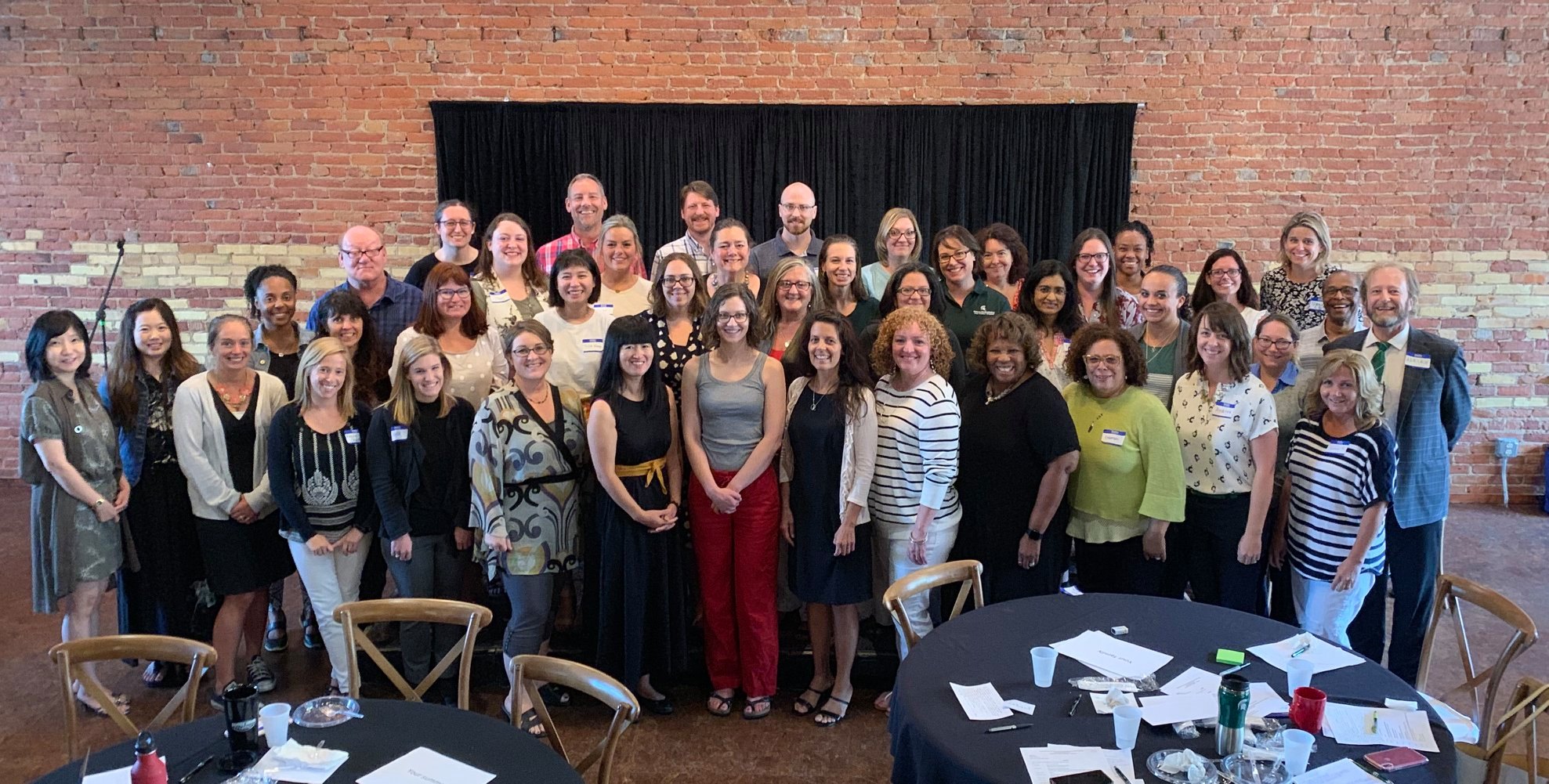
Through innovative research programs and high-quality education for students, child development faculty are creating new knowledge and training the next generation of scholars and practitioners.
Faculty in child development focus on generating knowledge related to the behavioral, psychological, biological, and contextual processes that promote positive developmental outcomes in children. We are engaged in the creation of new knowledge about development that drives innovative theoretical perspectives and informs practice and scholarship in support of optimal development. Our efforts as scholars and as educators are built around two core principles:
- Multiple contexts shape development, including family, school, community, culture, and biology.
- The empirically based application of research to real-world problems is essential in promoting the well-being of children and families.
Faculty
Dr. Ryan Bowles in an associate professor whose research studies early childhood language and literacy development.
Dr. Holly Brophy-Herb is a professor whose interested in how infants and toddlers come to understand their own and others’ emotions and influences on their experiences. Such influences include studying parent/educator well-being and supports for well-being, as well as processes such as parent/educator reflective capacities and mentalization processes, beliefs about emotions, and responses to expressions of emotions.
Dr. Sarah Douglas is an associate professor whose research focuses on three distinct areas: paraeducator supports for students with disabilities, communication partner training to support children who use augmentative and alternative communication, and sensor technologies to measure social interactions of children with disabilities.
Dr. Amy Nuttall is an associate professor whose research broadly focuses on processes of resilience and risk in the context of family stress with the broader goal of translating research into effective interventions.
Dr. Lori Skibbe is a professor who researches individual differences in the development of early language and literacy skills for children, including those with disabilities.
Dr. Claire Vallotton is a professor whose research interests are the early development and integration of cognitive-linguistic and social-emotional skills within the context of caregiver-child relationships, family risks, and culture.
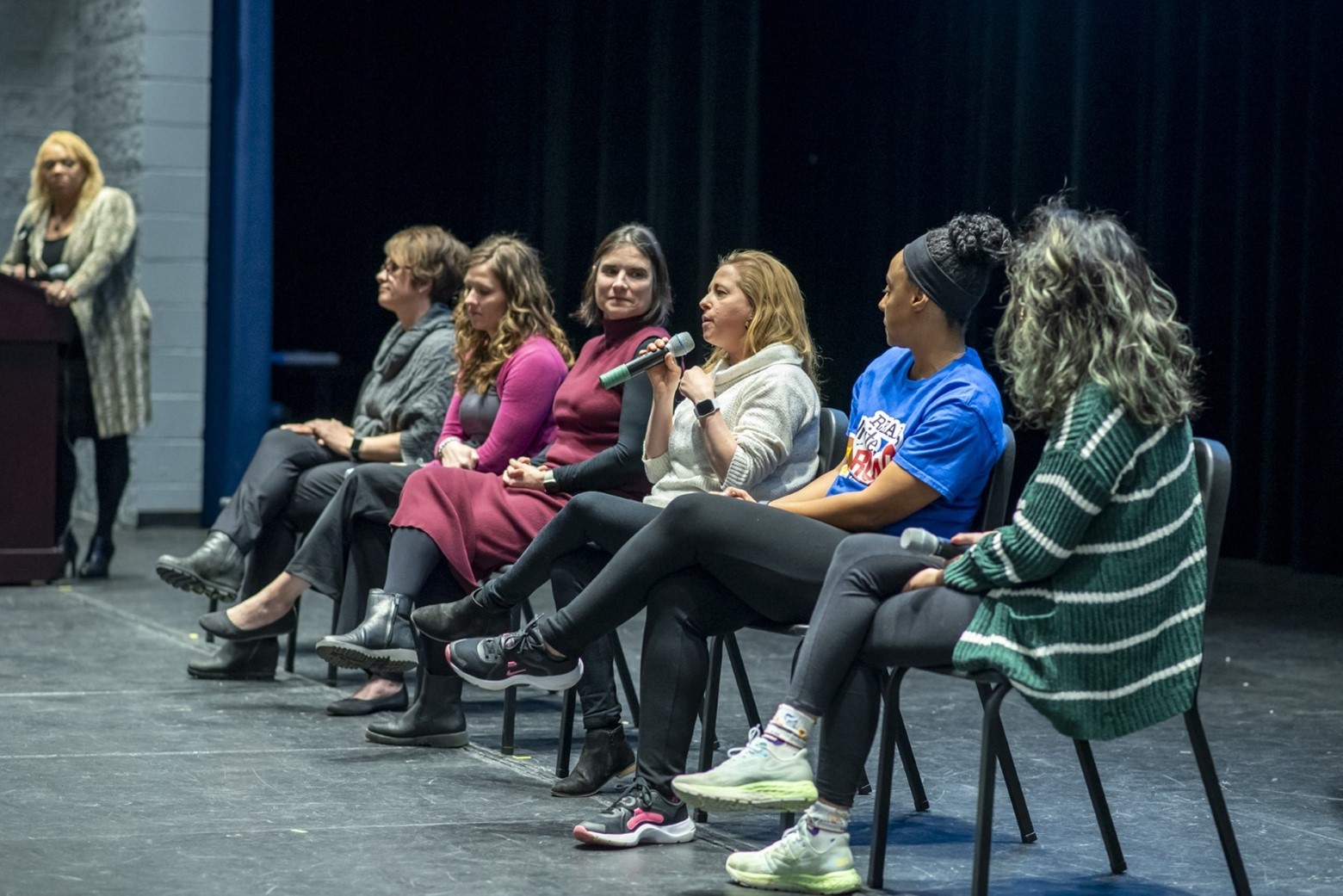
Child development faculty, in collaboration with the teaching faculty at the MSU Child Development Laboratories and others across campus and beyond, are currently engaged in research around two core, scholarly themes:
Language and Literacy Development in Early Childhood
Drs. Bowles, Douglas, Skibbe, and Vallotton are implementing programs of translational research in language and/or literacy development in early childhood including the contexts of schools and families, with a particular focus on at-risk populations including children with disabilities. As part of this emphasis, faculty and students work to create, implement, and evaluate intervention programs that advance instructional techniques and educational opportunities for children. They also work toward the creation and validation of assessments of early childhood language and literacy skills to understand how assessments work and what they say about child development.
Social Emotional Health and Well-Being in Infancy and Childhood
Drs. Brophy-Herb, Johnson, Nuttall, and Vallotton have programs of research investigating aspects of social and emotional development and the biological, psychosocial, behavioral and contextual processes, including cultural and family contexts, which influence development in these areas. Their scholarly work includes both basic and translational research models. HDFS is also a co-leader (Brophy-Herb, co-Director) in the Interdepartmental Graduate Specialization in Infancy and Early Childhood. This program provides a multidisciplinary forum for students to gain competencies across key areas such as research and evaluation and policy and advocacy, as well as provides students access to faculty from a variety of units across campus.
Research Resources
We expect and actively encourage graduate students to become immersed in the research process. Our graduate students will have opportunities to participate in multiple aspects of research including grant proposal preparation, data collection and coding, data analyses and interpretation, and dissemination. Faculty and students in the child development area meet on a regular basis. We all share interests in developmental studies in infancy and early childhood. Our meetings and get-togethers provide time for us to discuss current research efforts, plan new endeavors, and build relationships with each other. In addition to this experience, the Department offers a number of scholarly activities with which students may become involved.
The Department promotes active research programs by providing child and family research observation laboratories, coding and data analysis stations, and a meeting area for graduate students to network and collaborate. Child development faculty are actively involved in research collaborations with faculty across campus, across universities, and across communities around the world.
The MSU Child Development Laboratories offer excellent resources both for applied research and training in early development and education. The CDLs offer NAEYC-accredited early childhood programming to infants, toddlers, and preschoolers. In-classroom videotaping and audiotaping capabilities, one-way observation booths, and research databases result in an excellent research environment. The CDLs also serve as a training laboratory for early childhood educators. Working alongside master teachers, students have opportunities to engage in first-rate early childhood practices. Faculty and graduate students can apply to conduct research projects at the CDL.