Jump to HeaderJump to Main ContentJump to Footer
Michigan State University
Department of Human Development and Family Studies
  • Apply
  • Advising
  • Directory
  • Give

College of Social Sciences

Department of Human Development and Family Studies

  • About
    • Overview
    • Directory
  • |
  • Academics
    • Overview
    • Graduate
    • Undergraduate
    • Advising
  • |
  • Research
    • Overview
    • Child Development Laboratories
    • Laboratories
  • |
  • Outreach
    • Overview
    • Child Development Laboratory
    • Couple & Family Therapy Clinic
  • |
  • Alumni
    • Overview
    • Giving
  • |
  • News & Events
  • |
  • Contact
Department of Human Development and Family Studies

College of Social Sciences

  • About
  • Academics
  • Research
  • Outreach
  • Alumni
  • News & Events
  • Contact

< About

  • Overview
  • Directory

< Academics

  • Overview
  • Graduate
  • Undergraduate
  • Advising

< Research

  • Overview
  • Child Development Laboratories
  • Laboratories

< Outreach

  • Overview
  • Child Development Laboratory
  • Couple & Family Therapy Clinic

< Alumni

  • Overview
  • Giving

< News & Events

< Contact

  • Apply
  • Advising
  • Directory
  • Give
Department of Human Development and Family Studies > Academics > Graduate > Online Programs >

Early Childhood and Family Policy Certificate

Early Childhood and Family Policy Certificate

Graduate

  • Doctorate
  • Master's
  • Online Programs
  • Application Info
  • Financial Information
  • Student Resources
  • Assistantships
Michigan State University

About

  • Message from the Chair
  • Directory

Academics

  • Graduate
  • Undergraduate

Research

  • Laboratories

Outreach

  • Child Development Lab
  • Couple and Family Therapy Clinic

Alumni

  • Giving

Contact HDFS Office

517-355-7680

Contact Child Development Laboratories

517-339-6045

Contact Couple & Family Therapy Clinic

517-432-2272

Address

Michigan State University Human Ecology Building 552 W Circle Dr East Lansing, MI 48824

Releases and Statements

Follow Us

  • Visit our Facebook page
  • Visit our page on X
  • Visit our Instagram page
  • Visit our LinkedIn page
  • Visit our YouTube page

If you're having accessibility issues, please let us know.

Know More: Campus Safety Information and ResourcesTransparency Reporting: Budget & Salary/Compensation
Michigan State University
  • Contact Information|
  • Site Map|
  • Privacy Statement|
  • Site Accessibility|
  • Call MSU: (517) 355-1855|
  • Visit: msu.edu|
  • Notice of Nondiscrimination|

SPARTANS WILL|© Michigan State University|

  • Overview
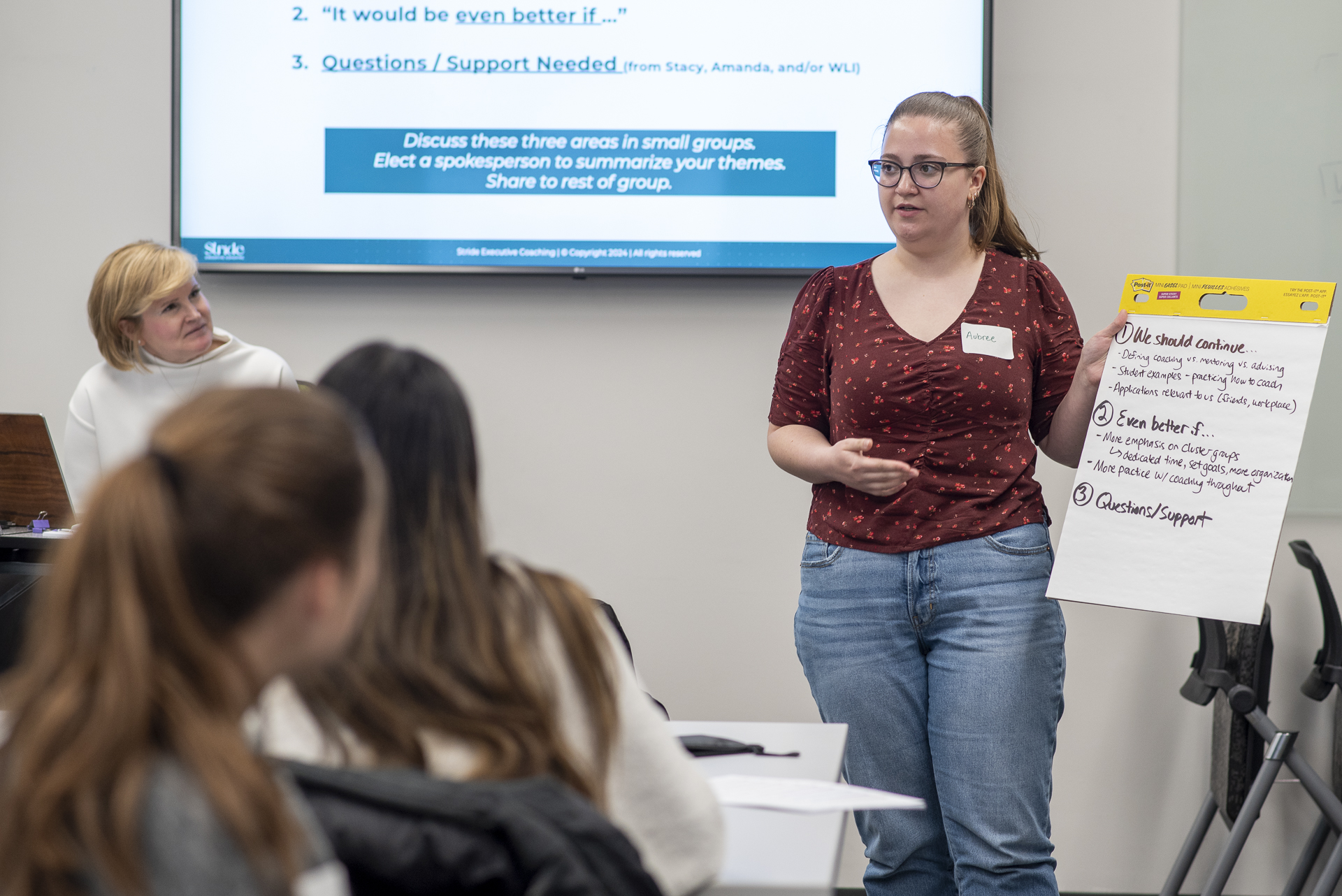
  • Woman at front of class presenting a poster to a group.

    Learn the tools to analyze policies and communicate with decision-makers. The Early Childhood and Family Policy (ECFP) graduate certificate builds essential skills in policy development, analysis, evaluation, and communication. Students develop an interdisciplinary lens to understand the impact of early childhood and family policies across systems that address health care, education, child care, family leave, mental health, child maltreatment, parental incarceration, and minimum wage. A just society is undergirded by quality services distributed equitably and sustainably to support children’s optimal development during the early years. This graduate certificate places students at the helm of a new era of policies that impact children and families. 

    Use your career to improve/positively impact the lives of children and families. The Early Childhood and Family Policy graduate certificate is designed for individuals committed to working across professional contexts to evaluate, inform, create, and advocate for evidence-based and equitable policies on behalf of diverse children and families. This certificate is designed for both current graduate students and working professionals in fields related to children, families, and public policy. For example, students and professionals in child development, community psychology, family sciences, education, health and human services, non-profit management, program evaluation, public policy, social work, sociology, social science research, women and gender studies, and any other fields addressing issues of poverty, equity, and diversity related to children and families. Those working toward completion of an Early Childhood and Family Policy graduate certificate  will be prepared to occupy positions in the following types of organizations: 

    • Local Government: City/County Offices or Commissions; Large Local Education Agencies
    • State and Federal Government: Administrative Offices in Education, Human or Social Services, Health and Mental Health; Legislative/Congressional Offices; Judicial Offices; Social Service Agencies with Advocacy Departments
    • Non-Governmental Entities: Early Childhood Professional Organizations; Foundations; Community, State, and National Non-Profit Agencies
    • Organizations associated with the United Nations, World and Regional Banks·
    • Advocacy Agencies and University/Research-based Organizations

    Flexible program that fits your goals; 100% online, and primarily asynchronous. 

  • Curriculum
  • The Graduate Certificate is completed through a series of rigorous online courses and learning experiences. A cohort model creates connections across disciplines and geographies. 12 credits completed in four eight-week courses, each offered once/year. The majority of course content is designed for you to access and complete at your convenience with no more than two synchronous sessions per course.

    • Includes four courses in Early Childhood and Family Policy:
      • 1. History, Child Development & Equity
      • 2. Examining Practices, Policies, & Key Issues
      • 3. Theory, Analysis, & Research
      • 4. Policy, Leadership, & Policy Advocacy
    • Capstone learning experiences completed through coursework will include:
      • Policy Brief (Course 3)
      • Policy Memorandum (Course 3)
      • Policy Communications Podcast (Course 4)
      • Policy Proposal and Oral Testimony (Course 4) 

    Read more by visiting the early childhood and family policy certificate program page on the Innovative Digital Education Alliance website. 

  • Innovative Digital Education Alliance
  • Michigan State University is a member of the Innovative Digital Education Alliance (IDEA). This multi-state alliance of accredited universities offers fully online undergraduate and graduate degree programs in the human sciences. Universities share knowledge through a body of faculty with expertise in the fields. This allows each campus to contribute unique course offerings to the degree programs and students have access to experts in the field regardless of location. For instance, MSU faculty in the area of early care and education have been awarded grants to study and create innovative online learning strategies to work with children.

    The Innovative Digital Education Alliance (IDEA) (https://www.idea.edu/) is different than other online universities in that:

    • The curriculum is developed by inter-institutional faculty teams at Research 1 institutions. The degrees are not just a collection of classes.
    • All courses and programs receive full institutional review prior to implementation and meet the rigorous institutional academic standards of all member schools.
    • Courses are taught by professors with expertise and research interests in content areas.
    • Students seeking admission must meet institutional admissions standards.

    In addition to Michigan State University, other participating institutions in these programs include:

    • Colorado State University
    • Iowa State University
    • Kansas State University
    • Montana State University
    • North Dakota State University
    • Oklahoma State University
    • South Dakota State University
    • Texas Tech University
    • University of Missouri-Columbia
    • University of Nebraska-Lincoln
  • Contact
  • For more information, please contact:

    Headshot of Meagan Rau.

    Meagan Rau, MSU Innovative Digital Education Alliance Campus Coordinator

    Address: 552 W. Circle Drive, 14 Human Ecology Building 

    Phone: 517-432-2266

    Email: gpidea@msu.edu